• About Max
  • Culinary Development and Strategy
    • Debbas Gourmet
    • A'cappella Chocolate
  • Media
    • Light O' Mine Media Radio Shows
    • Photography
    • Video Production
  • Acting
  • Education
    • EdTech Blog
    • Papers and Reports
    • Digital Citizenship
    • Edtech Tutorials
    • Tools and Tech
  • Words Words Words
  • Contact Me

Maxwell Debbas

  • About Max
  • Culinary Development and Strategy
    • Debbas Gourmet
    • A'cappella Chocolate
  • Media
    • Light O' Mine Media Radio Shows
    • Photography
    • Video Production
  • Acting
  • Education
    • EdTech Blog
    • Papers and Reports
    • Digital Citizenship
    • Edtech Tutorials
    • Tools and Tech
  • Words Words Words
  • Contact Me

A Lesson in Theory

A Lesson in Theory  

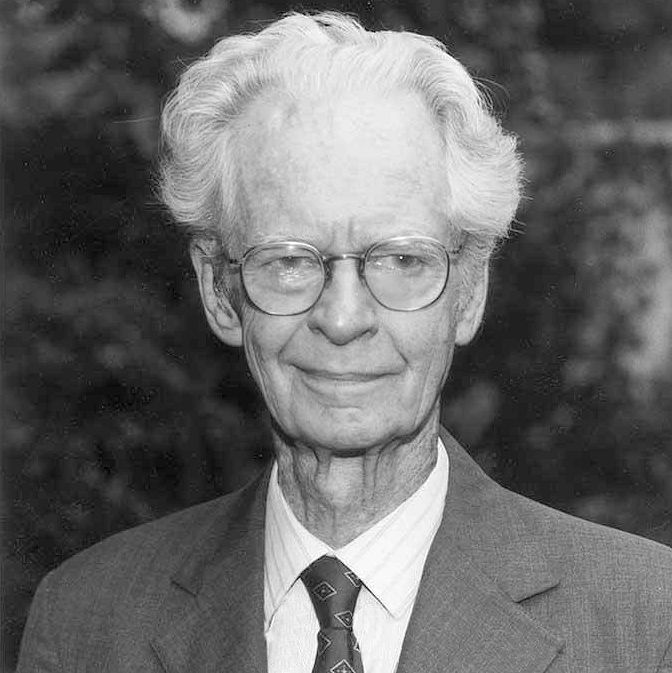
Foundations of Learning Theory has been an interesting class. It was unexpected in a naïve way. While I full well knew what the EdTech MA program has in store before I signed on, I had no idea I would be studying up and writing my final paper on B.F. Skinner (someone who is not necessarily famous for his use of technology in education). That being said, during my research into B.F. Skinner I was determined to find a connection between my area of study and ol' Big Forehead's Behaviorist theories.

I did.
b_f_skinner_32


B.F. Skinner had an enormous impact on media and how people interact with advertisements. Through Skinners ideas of operant conditioning we now have a better understanding of advertisement effectiveness and an entirely new study of commercial research (this can be found summarized in my B.F. Skinner literature review that I will post at the end of this entry).

What is my biggest takeaway from this course? That every learning theorist can be connected to almost every other succeeding theory, no matter what the primary subject. This is maybe not the impact that I was supposed to get from the course, but it was a big one for me. It is an idea that should have hit me out of common sense, but it had not. Common sense told me that, yes theorists learn from the superseding theorists, but I was lacking the understanding that they are connected to completely unrelated areas of study i.e. Operant conditioning and media studies.

The rest of the course had major takeaways as well. Having a background in various learning theories helps mold a teaching style. While I am fairly comfortable in my teaching style, I am always one to learn and improve. Having now implanted the ideas of Piaget, Papert, Dewey and others, it has opened my eyes to larger ideas that I can now fold into my class dynamic. While some of these ideas are ones that I think teachers have learned over time, it is always refreshing to have a deeper and technical understanding. I for one will be applying many of Papert's ideas to my repertoire, or at least using his ideas to justify the uncommon tech ideas I plan on implementing into my future classes.

B.F._Skinner_Lit_Review_Max_Debbas

categories: EdTech
Saturday 12.12.15
Posted by max debbas
 

View-Master: The future of Education and Journalism

viewmaster2.jpg

Bear with me. I know I have touched on this before. In fact, I touched on this not too long ago, but I now things have changed. Now, the big guys have shown the world (or at least a good chunk of the United States) how VR can change the face of journalism. If you don’t know what I am talking about you can begin to read about it here (http://www.nytimes.com/2015/10/21/business/media/the-times-partners-with-google-on-virtual-reality-project.html?_r=0) or here (http://www.engadget.com/2015/10/20/ny-times-vr-app-google-cardboard/) or just search "New York Times Google Cardboard" and view any of the top 20 results. I will sum it up for you: The New York Times included a Google Cardboard VR viewer with the November 7th weekend paper. A Google Cardboard VR viewer is a fold out device that turns your smartphone into a basic virtual reality viewer, letting you see 3D and 360-degree videos. The times also debuted an app that works with Google Cardboard as well as a new journalism film that is fully immersive, or at least its 360 degree video.vm-360[1].gif  

The future of students learning via 360 degree VR films is not far away. Its now! No longer must you purchase a thousand dollar VR headset, or even a hundred dollar VR set, you can get one free in the newspaper! If you were not lucky enough to get one you build one with instructions from here (http://www.google.com/get/cardboard/get-cardboard/). What really gets me excited is this: The View-Master. Yes, that View-master. The red plastic goggles with the circular disks. You remember those right? You would insert the disc into the red goggles, pull down the trigger and you would see a grainy photo?   View-Master has released an updated version, one that works with Google Cardboard. You still get the plastic goggles, but now you slip your phone inside and that operates as the VR screen. You still get the little discs with photos. But now you look at those discs and they become 3D images of landmarks. Click on one of those landmarks and you get inserted into a 360 Degree VR experience of that location. Amazing. The View-Master also works with all Google Cardboard apps.

You want to make a 360 VR experience for your students? Simple. Use the Theta 360 Camera that I talked about in my earlier post, load it into Youtube as a Cardboard Video, then students only need to visit that video using the View-Master (or any Google Cardboard). You want to step up your journalism game? Take the Theta along on your next assignment, get footage of each location. Let viewers visit the locations while your story is played on top.


http://www.view-master.com/

http://www.google.com/get/cardboard/get-cardboard/

https://theta360.com/en/about/theta/s.html

categories: EdTech
Friday 12.04.15
Posted by max debbas
Comments: 1
 

That keyboard really tied the room together.

24.543

I have had a number of discussions recently based around the question, "what computer platform is best for classrooms?". What I find interesting is the overwhelming favor of the iPad. There is never a great answer for why an iPad should be used in a classroom; the answers that justify an iPad, just as easily justify a Chromebook. I understand that the iPad is the gold standard when it comes to tablet computers (or at least that’s what everyone has been brainwashed to think), but I hate a notion that a tablet is not the answer.

According to EducationDrive, iPads have outsold Mac computers 2 to 1 for the last three years in the education department. Much of this can be attributed to the price tag of a $399 iPad vs that of a $999 Mac, however is the savings on price worth the lack of functionality? The Pro's and Cons of tablets in the classroom have hashed out extensively, however they almost always seem to lack the big picture. The most common pros and cons I have seen:

PROS:

  • Extending learning
  • A vast library of resources
  • Reducing printed material and books
  • Improving STEM skills
  • Engaging the hard to reach

CONS:

  • Breaking expensive technology
  • Online safety and security
  • An unnecessary distraction
  • Battery limitations

This may sound silly, but hear me out: the lack of a keyboard is a huge loss! More so than ever, typing is a skill that must be mastered in our society. Utilizing touch first operating systems in a class environment creates a gap in a fundamental "real world" skill. For that reason alone I would recommend against using iPads in the classroom. This answer may be solved by new devices like the iPad Pro, but for $949 you might as well purchase a full computer with a much more capable operating system.

My current picks for classroom computers:

K-12 - Chromebook.

A Chromebook is inexpensive, secure, cloud enabled, multi-user friendly, and has almost full PC functionality through Chrome extensions.

Higher Ed - A full PC, a Macbook, or a 2-in-1.

My personal favorite devices are a Macbook Pro (I am still a Final Cut Pro user) and a Surface Pro. The Surface Pro has been fantastic as a school workhorse. The tablet interface is great for reading, PDF markups, while the Keyboard and mouse add on create a full PC experience.

categories: EdTech
Saturday 11.28.15
Posted by max debbas
 

School: where you go to play video games

minecraft edu

I have always thought that my generation and younger generations had a slightly different learning ability then previous generations of learners. We grew up with videogames, and with videogames we learned. It seems odd, but yes, we learned from videogames. At the very basic level we learned hand-eye coordination, and at greater levels we learned shape and puzzle relations from games like Tetris and Dr. Mario. As gaming technology increased, so did the level of learning. I have concrete memories of Super Munchers and learning math and vocabulary, and most everyone knows the pain of dying of dysentery while playing a long game of Oregon Trail. Heck, if it wasn’t for Mario Teaches Typing, I wouldn’t be posting on this blog. While delving into the EdTech world, I am finding that video games can be used to a greater extent than ever.

I recently read a blog post on KQED's MindShift blog called, From Mars to Minecraft: Teachers Bring the Arcade to the Classroom. The author, Jordan Shapiro, writes about many current videogames that are being created specifically for learning purposes, "Consider Mars Generation One: Argubot Academy. Designed by GlassLab, in collaboration with NASA, the game is aligned with Common Core ELA standards and infused with STEM content. It focuses on teaching argumentation, and in particular, it focuses on how to use evidence to support claims.". Games such as this are reminiscent of the games of my youth, games such as Yukon Trail and Oregon Trail, however, now these games are specifically geared towards meeting the educational needs of students as well as the educational requirements of the state. "Mars Generation One: Argubot Academy is a role playing game that combines a space-age storyline about building a Mars colony with great animations.". While I do not teach this field of education whatsoever, I can imagine it is a hard topic to conceptualize with young students. A game such as this helps engage students in a subject that would have previously been lost on them.

Many teachers have begun to use MinecraftEDU in their classrooms. Shapiro writes, "MinecraftEDU provides a virtual world where teachers and students can build simulations with unlimited resources. When I was a student, we held mini-Renaissance Faires and built toothpick bridges. We were always limited by time, space, and resources.". Imagine a class learning about the impacts of climate change or city engineering, they can utilize Minecraft to model virtual 3D environments in which the criteria live and work.

Why am I sending my child to school to play video games?! I ask, why not? If students are learning at a greater capacity, and learning in a way that involves interactive experiences, I am all for utilizing video games in the classroom.

categories: EdTech
Saturday 11.21.15
Posted by max debbas
 

Ready Papert One

heres-what-happened-when-we-strapped-a-bunch-of-people-into-the-oculus-rift-virtual-reality-headset1.jpg

Recently I have been reading about learning theories by the greats such as Jean Piaget, Seymour Papert, Etienne Wenger, John Dewey, and LeVar Burton. Though I have a heavy load of reading on my plate, I managed to squeeze in some fiction as well with Eric Cline's Ready Player One. Interestingly enough these theorists and Cline read well together and have brought up many thoughts on the future of education. Papert suggests that the greatest way to learn a subject such as math, would be through computer technology. That by utilizing computers, the student no longer gets taught math in the typical sense, but instead, through interaction and "living" math, they absorb the knowledge and develop a more complete understanding. In the book Ready Player One, school is no longer taught in a physical classroom, instead it is taught through a virtual reality system. This virtual reality system goes far beyond our current idea of virtual schooling, in fact, in the book the students feel as if they were indeed in a physical classroom. They wear a VR system that lets them look around the classroom, interact with others in the class in real time, and pull up additional information screens in their vision. The book goes on to explain how teachers use "quests" to teach students. Instead of reading about how ancient Egypt looked, they could take a guided tour of a photo-realistic virtual world of ancient Egypt. The technology as it is in Ready Player One is in fact not available today, however we do have surprisingly similar "lesser" technology. With systems such as Oculus, Holo Lens, Google Cardboard, and others we currently can visually interact with virtual 3 dimensional surroundings. In videos such as the one from School of Rock: The Musical found here (https://www.youtube.com/watch?v=GFRPXRhBYOI) the viewer has the option to view the video with one of the VR systems and "be in the musical.". Within this video the viewer can look around the room and discover things like the chords and lyrics of the song being scrolled across the ceiling. This is an incredible example of the future of computer assisted learning that Papert talked about. While this of course is no substitute for guitar lessons, it is however a fully immersive lesson in guitar.

With modern technology such as a Theta camera that creates 360 degree 3D video and the VR systems, teachers can create immersive and interactive lessons now, and not have to wait for the future! Anyways, more to come when I think this over some more.

categories: EdTech
Friday 11.13.15
Posted by max debbas
 
Newer / Older

max@maxdebbas.com